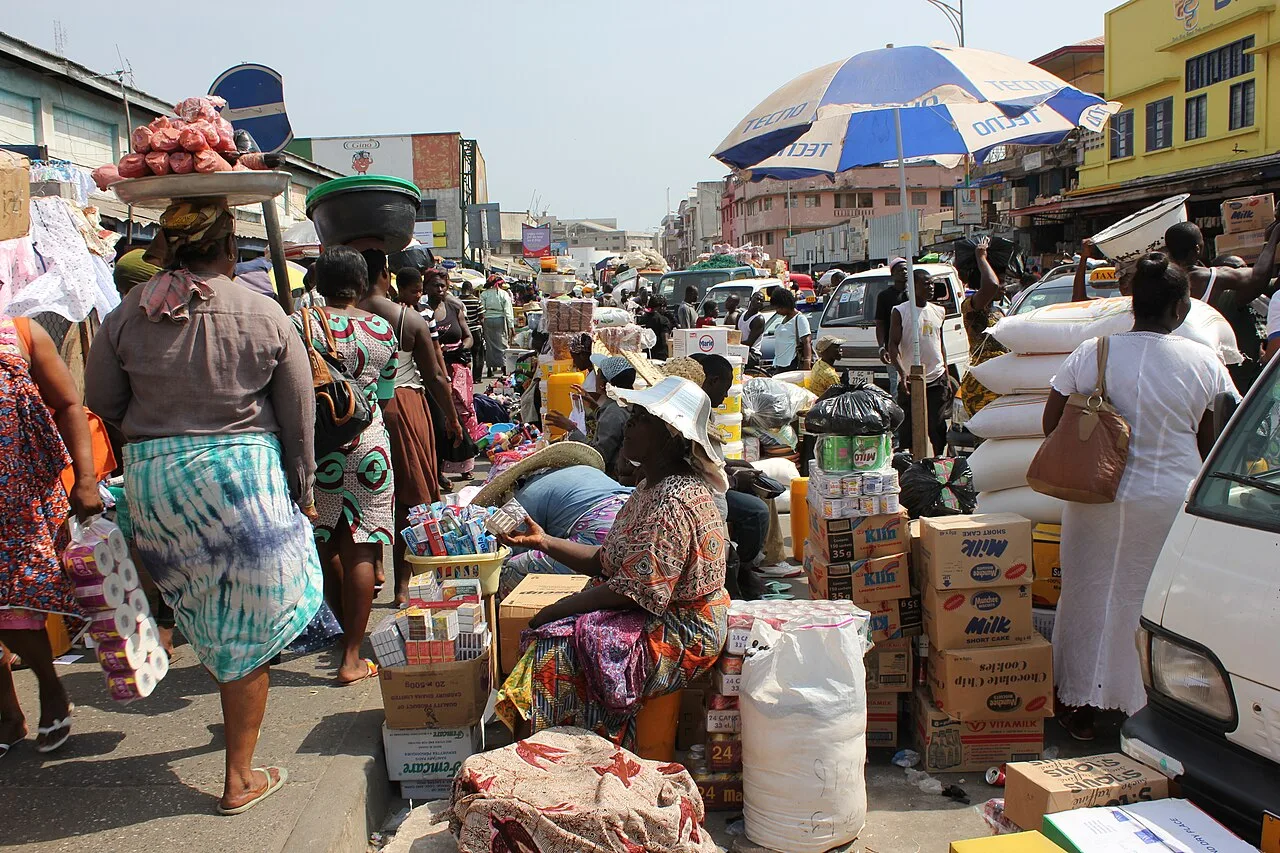
The markets worth knowing
Makola Market in central Accra is the big sprawling one, selling everything from fabrics and beads to food and household goods. Kantamanto, nearby, is one of the world's largest second-hand clothing markets. In Kumasi, Kejetia Market is a vast multi-storey maze and one of the biggest in West Africa. Kaneshie, Madina and Nima serve Accra's neighbourhoods, while Osu's stalls are more visitor-friendly.
- Go in the morning when it is cooler and less crowded; markets wind down in the late afternoon.
- Wear closed shoes, carry water, and keep bags in front of you.
How pricing actually works
In markets and for informal services the first price is an opening bid and bargaining is expected. It is a social exchange, not a confrontation. Supermarkets such as Melcom, Shoprite and Marina Market, malls, chain shops and most restaurants have fixed, marked prices. Taxis are negotiated, ride-hailing is app-priced, and fabric, art, crafts and souvenirs are all fair game.
- Opening at roughly half the quoted price is a common starting point, then meet somewhere in the middle.
- Walking away politely is the strongest move you have; use it once, not as a game.
Doing it well
Bargaining works best when it is friendly. Ask about the item, compliment the craft, keep smiling and be willing to pay a fair price, because many traders work on thin margins. Once you name a price and the seller accepts, you have made a deal: refusing to pay after that is genuinely offensive. Buying several items together gives you more leverage than haggling over one.
- Learn to count in Twi or Ga; it changes the tone of the negotiation completely.
- Decide your hard maximum before you start and do not exceed it out of embarrassment.
- Buying directly from the maker at a craft village or workshop often gets better quality and a better story.
Safety and logistics
Markets are crowded and pickpockets work them, so keep wallets and phones secure and never flash large sums. Porters, many of them women known as kayayei, will carry your purchases for a small fee. Photography in markets requires asking, and some traders will ask for money, so agree before you shoot. Arriving by ride-hailing avoids the parking and traffic headache entirely.
- Set a meet-up point with your driver in case you get separated from your group.
- Carry small notes and coins; change is scarce and prices are low.
- If you are buying fabric, ask about on-site tailoring. It is fast and good value.
Rules, fees and opening hours change. Confirm anything that matters before you rely on it.