Harmattan (roughly December to February)
The harmattan is a dry, dusty wind blowing down from the Sahara. It brings hazy skies, low humidity, cooler mornings and evenings, especially in the north, chapped lips and skin, and fine dust that settles on everything. It can cut visibility enough to delay flights and aggravate asthma and sinus problems, but it also takes the edge off the coastal heat and produces dramatic sunsets.
- Pack lip balm, moisturiser, eye drops and a light dust mask if you have respiratory issues.
- Keep camera gear and electronics in sealed bags and avoid changing lenses in the open.
- Nights in the north can be genuinely cold; bring a fleece or jacket.
The rainy seasons
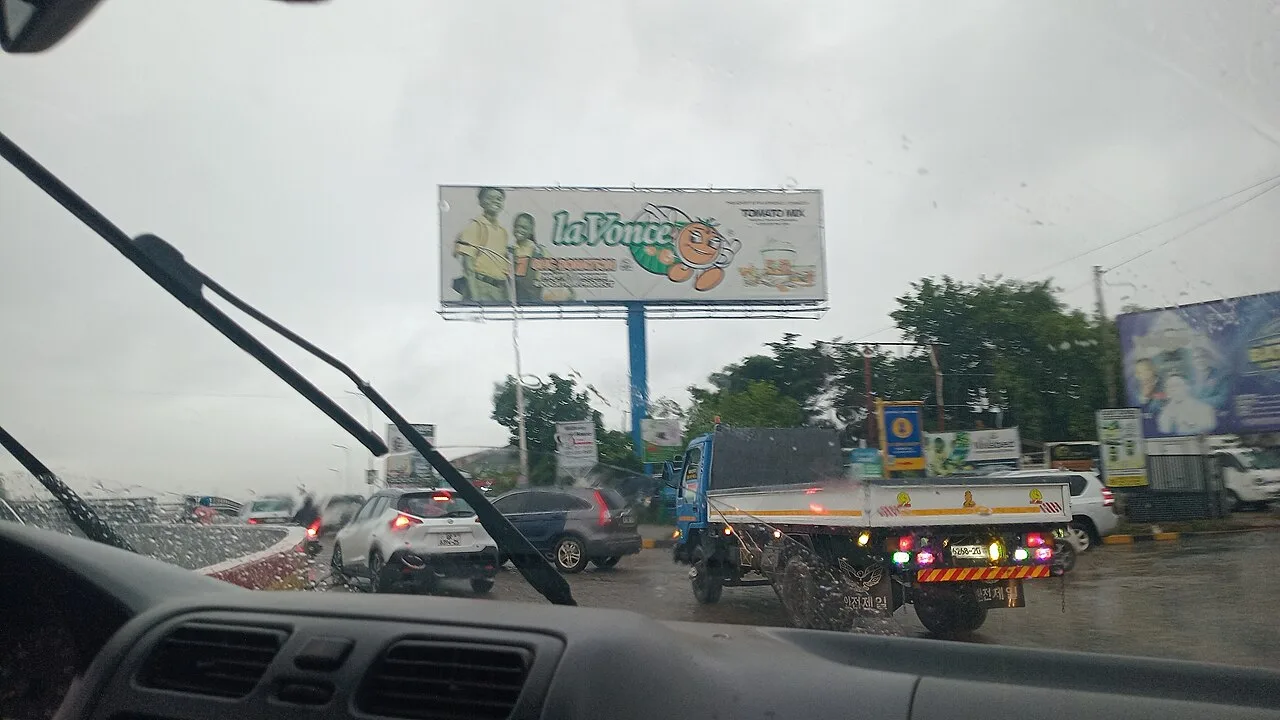
Southern Ghana generally has a major rainy season from around April to July and a minor one from around September to November, with the heaviest downpours usually in May and June. Rain tends to arrive in intense bursts rather than all-day drizzle, but it floods low-lying parts of Accra quickly. The north has a single rainy season roughly from May to October.
- Carry a compact umbrella or light rain jacket; you can also buy one cheaply locally.
- Avoid low-lying routes during heavy rain and expect traffic to seize up completely.
- Roads to waterfalls and eco-tourism sites get muddy, so check conditions before setting out.
Dry season and the best travel windows
The driest and most popular window is roughly November to March, which coincides with harmattan and the December rush of diaspora visitors. The greenest landscapes come in the rainy season, when the Volta Region and the waterfalls are at their best. Coastal temperatures are fairly steady year-round, while the north swings from very hot in the dry season to humid in the wet.
- Book accommodation and domestic flights early for December and Easter, both are peak.
- For lush scenery and fewer crowds, aim for the shoulder weeks at the start or end of the rains.
What this means for your plans
Build flexibility into any trip involving light aircraft, ferries or long road journeys during harmattan or heavy rain. Beach and boat trips are best in the dry season, while hiking and waterfalls are better in the green season. Either way, weather is rarely a reason not to travel. It just changes the shape of the day.
- Check domestic flight status on the morning of travel during harmattan.
- Pack layers: coastal humidity, cold harmattan nights and strong air conditioning all appear on the same trip.
Rules, fees and opening hours change. Confirm anything that matters before you rely on it.