Everyday dress
Day-to-day dress in the cities is relaxed: jeans, T-shirts, dresses and sandals are all normal, and Ghanaians dress smartly for work and church. Beachwear belongs at the beach or pool, not in town or at markets. Loose, modest clothing is also more comfortable in the heat and the harmattan dust.
- Light, breathable fabrics plus a light layer for air-conditioned offices and cool harmattan mornings.
- Keep a wrap or scarf in your bag so you can cover shoulders or head at short notice.
Shrines and traditional spaces
At traditional shrines and during ceremonies, dress conservatively: covered shoulders and knees, nothing revealing, and often no shoes inside the shrine itself. Some shrines ask women not to enter while menstruating, and some have rules about colours or fabrics. Take your cue from the elders and follow instructions exactly, these are living religious spaces, not attractions.
- Ask before entering, and ask what the dress rules are rather than assuming.
- Bring a cloth or wrapper; it is useful both for covering up and for sitting on the ground.
Mosques and churches
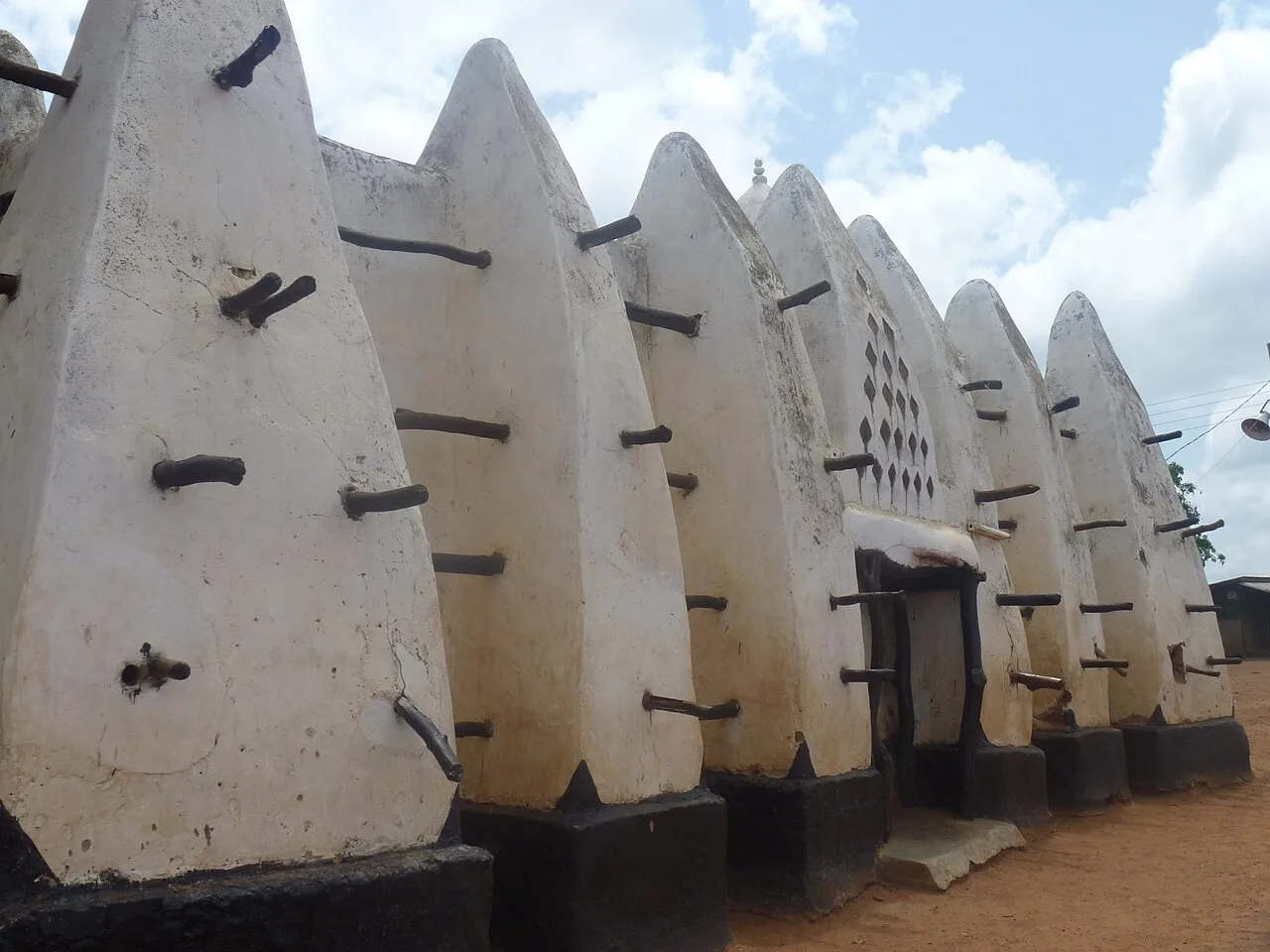
In mosques, women should cover their hair and everyone should cover shoulders and legs; shoes come off at the entrance, and visitors may be directed to a designated area. In churches, Ghanaians tend to dress up, men in shirts or suits, women in bright prints and often a head covering, so smart-casual is the minimum. Services can be long and lively, so dress respectfully and avoid flash photography.
- Friday prayers are busy; visit at other times unless you are joining for worship.
- In some churches women cover their heads, so a scarf is useful either way.
Traditional events and funerals
For durbars, festivals and funerals, dress is part of the respect you are showing. Black and red are mourning colours in much of southern Ghana, families may specify a cloth or colour for a funeral, and wearing the family cloth is a strong sign of solidarity. For a durbar, smart or traditional dress is appropriate; avoid shorts and flip-flops, and when in doubt ask your host.
- If you are invited to a funeral, ask what to wear and whether to bring a donation rather than guessing.
- Buying a local print cloth is both a great souvenir and a way to dress appropriately for an event.
Rules, fees and opening hours change. Confirm anything that matters before you rely on it.