The short answer
The country now called Ghana was the British Gold Coast until 1957. When it became independent, Kwame Nkrumah's government renamed it after the Ghana Empire, a medieval West African state that flourished roughly a thousand years earlier and whose territory lay in what is now Mali and Mauritania. Not one square kilometre of that empire was inside modern Ghana.
That was not a mistake and it was not ignorance. It was a deliberate act of reclamation, and understanding why is a good way into understanding the country.
What the Ghana Empire actually was
The empire called itself Wagadou. Ghana was the title of its ruler, and Arab writers who described it from across the Sahara used the ruler's title for the whole state, which is how the name reached Europe. Its capital is generally identified with Koumbi Saleh, in southern Mauritania, and it grew wealthy on the trans-Saharan trade in gold and salt.
It was at its height between roughly the eighth and eleventh centuries. It was not a coastal power and had nothing to do with the Atlantic. It was a Sahelian state whose wealth came from controlling desert routes, and it was eventually eclipsed by the rise of Mali.
- The state's own name was Wagadou.
- Ghana was the ruler's title, not the country's name.
- Its heartland was in modern Mali and Mauritania.
What was here instead
The land that became Ghana has its own long history, and it is different from the Sahel. The Akan peoples moved into the forest belt, and by the thirteenth century several Akan states were established, including Denkyira, Akwamu and later Asante. Further north were Dagomba, Gonja and Mamprusi states with their own links across the savannah. Along the coast, Ga and Ewe communities lived off fishing and trade.
When Europeans arrived in the fifteenth century they found a coastline already organised for trade, with established states behind it. The Portuguese built Elmina Castle in 1482, which makes it one of the oldest European buildings still standing in sub-Saharan Africa.
Why Nkrumah chose the name
By the 1950s the Gold Coast was a colony named after the commodity that had drawn Europeans to it. Nkrumah and the Convention People's Party argued that independence meant more than a change of government. Taking the name of an old and powerful African state was a way of saying that the new country's history did not begin with the arrival of Europeans, and that its future belonged to a longer African story.
It fitted the wider Pan-African project. Nkrumah saw Ghana as a base for the liberation of the rest of the continent, and the name signalled that the country was reaching past the colonial period to something older and larger. The Black Star on the flag carries the same idea, taken from the shipping line Marcus Garvey founded as part of the back-to-Africa movement.
Why it matters when you visit
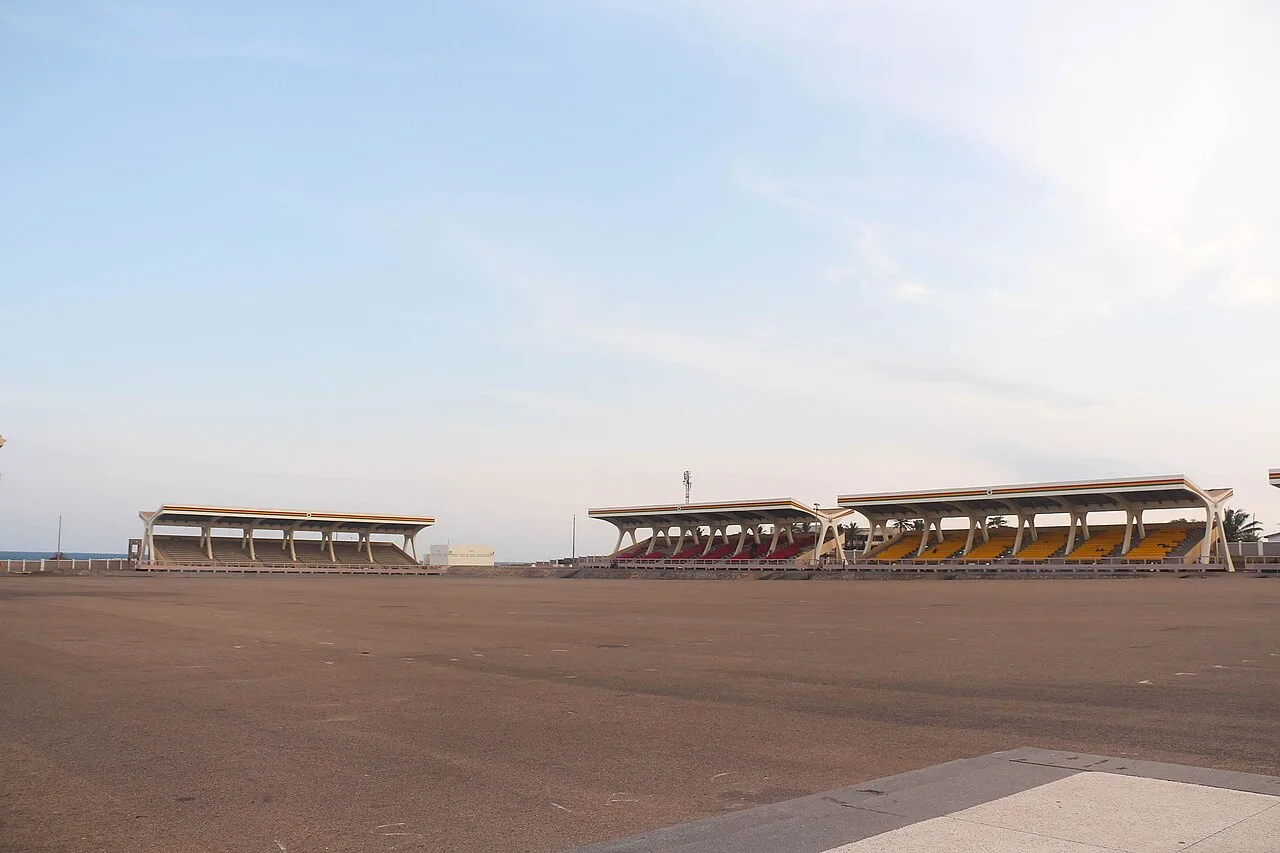
There is a running theme in Ghana's public history of reaching for a longer story: the forts and castles, the Ashanti kingdom, the Pan-African project, and the Year of Return all sit on that line. Knowing the naming story makes the Independence Square monuments, the Black Star Gate and the Nkrumah Memorial Park read as arguments rather than decoration.
It also answers the question a lot of visitors are too polite to ask. No, the Ghana Empire was not here. Yes, that is the point.