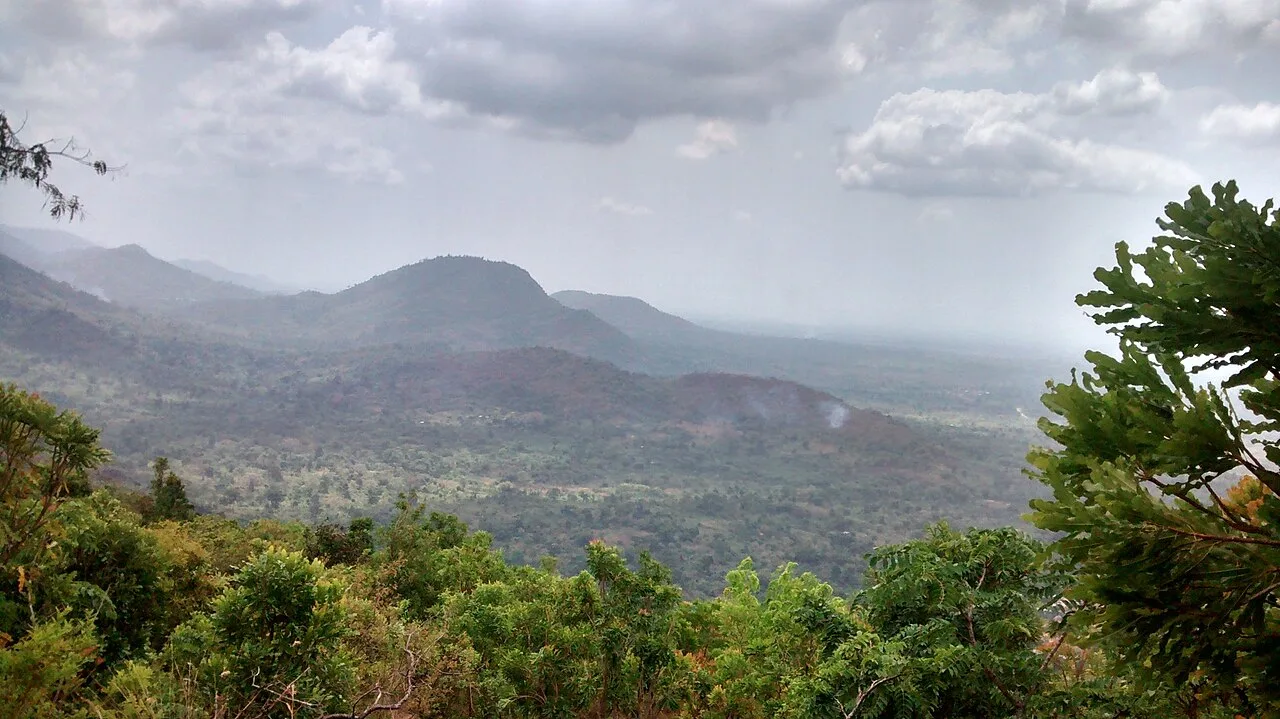
Why the Volta Region is different
The Volta Region runs along Ghana's eastern border with Togo, and it is the greenest, hilliest part of the country. The landscape changes as you drive north from the coast: coastal lagoon, then rolling farmland, then the Agumatsa range and the forest around it. It rains more here than almost anywhere else in Ghana, which is why the waterfalls work and why the hills are covered.
It is also the least visited region that is genuinely easy to reach. Ho is three to four hours from Accra on a good road, and from Ho the waterfalls and the mountains are all within ninety minutes.
Wli: the waterfall worth the trip
Wli, near the Togo border, has the tallest waterfall in West Africa, and the walk to the lower falls is about 45 minutes on a flat, shaded path that almost anyone can do. The upper falls are a steeper two to three hour return and worth it if your knees are willing.
Be honest with yourself about fitness and daylight. The path to the upper falls is not technical but it is long, and turning back halfway is the sensible outcome for a lot of people. Go in the morning, wear shoes with grip, and take water. The spray zone at the bottom of the lower falls is the coolest place in Ghana on a hot day.
- Lower falls: about 45 minutes each way, easy going.
- Upper falls: two to three hours return, steep and slippery when wet.
Afadjato and the monkey sanctuary
Mount Afadjato is the highest point in Ghana at 885 metres, and the climb is about two hours up and back. It is a real hike rather than a walk, steep in places, and the reward is the view across to Togo and down into the villages. Start before eight to beat the heat and the cloud.
Tafi Atome, half an hour away, is a monkey sanctuary where the Mona monkeys have been protected by the community for decades and are now entirely unbothered by people. It is a short guided walk, it costs very little, and it pairs naturally with Afadjato on the same day. Do the mountain first, while it is cool, then the monkeys.
Amedzofe and the road to it
Amedzofe sits high on the ridge and is one of the highest settlements in Ghana, with a canopy walkway, a waterfall and a view that on a clear day runs all the way to Lake Volta. Mount Gemi above the village has a cross at the summit and a road most cars can manage.
The drive up through the hills is half the point. It is one of the best roads in the country for scenery, and it is the reason to keep a driver rather than take a bus: you will want to stop.
Ho, and the coast at Keta
Ho is the regional capital and the practical base. The central market is big, cheap and worth an hour, and the Volta Regional Museum will not take you long but explains the Ewe history that makes the region distinct from the rest of Ghana.
South of Ho, the coast around Keta is a different landscape again: the lagoon, Fort Prinzenstein, and a coastline that coastal erosion keeps reshaping. The lagoon is a working fishery and going out with fishermen at dawn is more interesting than any organised tour. Check the state of the beaches and access roads before planning around them.
Getting there and around
Ho is about three to four hours from Accra by road, and buses and tro-tros run it through the day. From Ho, the attractions are spread out and public transport to them is slow, so the practical options are a car and driver or a motorbike taxi for short hops.
A driver for a full day in the region runs roughly GHS 500 to GHS 900. If you are doing Wli, Afadjato and Tafi Atome, staying in Hohoe or at Wli rather than Ho saves you two hours of driving a day. Take cash: card acceptance outside Ho is close to zero.
When to go
The drier months from November to March are the easiest, though the waterfalls are at their most dramatic during and just after the rains. The harmattan in December and January brings hazy skies that cut the views from Afadjato and Amedzofe, which is a real trade-off if the view is why you are climbing.